

For 25 years
Adhere to GRS
It is committed to transforming waste plastics into reusable textiles, clothing and daily necessities.
For 25 years
Adhere to GRS
It is committed to transforming waste plastics into reusable textiles, clothing and daily necessities.


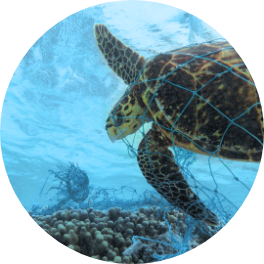
Man's claim to the ocean is infinite.
However, the self-healing capacity of marine ecosystems
is limited
Globally, more than 30 million tons of plastic waste is discarded every year.
More than 20 million tons of plastic waste flows from land to sea through rivers.
At present, more than 80% of almost all types of plastics found in the ocean are non-degradable resin materials such as nylon (PA), polypropylene (PP), polyethylene (PE) and polyvinyl chloride (PVC).
Marine waste fishing nets are a huge source of plastic pollution, and they also kill turtles and other marine life.
On average, ghost fishing nets take 600-800 years to decompose naturally.
Social responsibility
Publicity
Linking domestic and foreign public welfare organizations and brands to jointly publicize the understanding of marine ecological pollution to the public.
Encouragement
Encourage fishermen and fishing villages to recycle used fishing nets and other recyclable waste products to promote a circular economy in fisheries, turning waste into treasure.
Action
Save marine animals such as turtles, sharks and dolphins together, and participate in reducing chemical fiber raw materials with brands carbon emissions, saving energy and water consumption, and contributing to the country's 2030 carbon peak and 2060 carbon neutrality.
Feedback
Promote fishery participants to join this circular economy and help local fishermen obtain additional income, Improving the well-being of fishermen.


Product Application
The products come from abandoned fishing nets and plastics produced by deep-sea fishing activities, and can be used in automobile interiors, electronic products, artificial leather backing fabrics, leather shoes inner and back covers, and various shoe sole anti-slip fabrics, etc.

Non-woven fabric for shoes and hats

Inside the bag

Car interior

Electronic Products
News